Sunday, November 16, 2008

There's something stirring...

"The right to marry whoever one wishes is an elementary human right compared to which ‘the right to attend an integrated school, the right to sit where one pleases on a bus, the right to go into any hotel or recreation area or place of amusement, regardless of one’s skin or color or race’ are minor indeed. Even political rights, like the right to vote, and nearly all other rights enumerated in the Constitution, are secondary to the inalienable human rights to 'life, liberty and the pursuit of happiness' proclaimed in the Declaration of Independence; and to this category the right to home and marriage unquestionably belongs," - Hannah Arendt, Dissent, 1959.


I meant to post this yesterday, but today's a better choice. Right across the USA, if not the world are significant protests against the passage of Proposition 8 in California and openly for Homosexual marriage. Not just in the usual places of New York and San Francisco, but Alaska, Iowa City, Philadelphia (Alright that one isnt too suprising), but how about Wisconsin or Salt Lake City ?

Whilst the acceptance of Homosexuality is only somewhat higher amongst Gen-Y and below, what is significant is that it is real acceptance, not just a lack of hate or discrimination, or even just tolerance, for those who dont have a problem with Homosexuals, the idea that any form of discrimination or second class status is valid is completely unacceptable.

This comes up as a policy break on the left between the old and new generations in the issue of Gay Marriage. Whilst older left wing politicians like the Prime Minister Kevin Rudd or even our own Jon Stanhope (ACT Chief Minister) tolerate and want to end discrimination against Homosexuals, for neither is full marriage the right answer. But for the youth there is no question, just as Hannah Arendt wrote in 1959 that Marriage is not only the only option it is an inviolable right for any and all adults in this world.

I'm not saying the youth will rise and overturn the discrimination against Homosexuals, sadly too many of my generation still bear that prejudice and even wear it openly at times, despite the prevelance and normality of homosexuals in our culture and social lives. But if and when action is taken by this generation, it wont be for half measures like Civil unions. Only full marriage, of term and form will be seen as acceptable.

Really how could anything else be?

Sunday, November 9, 2008

Night thoughts of writer

This blog will continue its political bent. But for the moment it feels appropriate to draw out to dicuss some of the other great threads of life in culture and society. However first, glass of wine in hand, its worth reconsidering the mere act of writing itself.

To be honest, I havn't thought of myself as a writer for many a year. It was at best an early dream to overcome my crippling failure as a student in normal society. Year 12 and its strictures simply did not suit me. Fittingly it has taken a documentary on Hunter S. Thompson to revive those long lost thoughts. Ironically, it was an interaction with another HST junkie several years ago that led me off that path. The boy was some non-descript fool who thought drugs were the path to enlightenment and great writing (I'm yet to see his name on a book spine, though havn't bothered to look).

When I read Hunter S. Thompson, -though only at his best- I can almost feel the heartbeat of the writer behind the symbols, the calculating but impulsive drive to find not just some words, but the right word for each circumstance. In reading Hunter you feel taken into the writers confidence. Like Kerouac, or in touches Hemmingway and Faulkner, Hunter gave you a sense of having read the first draft straight off his typewriter. In that way he was the original blogger, though he would abuse us all for the term, and decry the slovern nature of bloggers who think their unprepared, unpolished thoughts worthy of mass consumption. Hunter was never unpolished, never unprepared, never quite the raw immediate edge which his writing seemed to imply.

Hunter was never in a word, unprofessional.


If anything is my objection to this odious tag blogger, (and I guess now to my fellow colleagues) it is the asserted but never evidenced claim that the authentic mouth rattling out his thoughts is more worthy of consideration than a dozen professionals, with their carefully edited and crafted thoughts. Much like the Republican parties objectification of Sarah Palin as a leader of the American people because of her connection to the American people, these bloggers assert that their rejection of the mainstream media somehow represents their qualification for being real commentators on the american dream.

I've always thought there is something intoxicating in this whole writing process. Its long held and celebrated connection to booze only adds to this mythos. Writing at its purist asserts the direct translation of thoughts to physical symbols. In some ways the illusiory character of the letters doesn't matter, what counts is the process that connect mind to reality. To push from consciousness to practice.

Philosophy has spent 2000 years failing to guarantee us this link. Physics has to institute a dozen never seen, felt or smelt particles to somehow connect the noumenal to the phenomenal. Chemistry, Maths, Religion are no help here at all other than vainly wishing 'what you see is what you get'. As always doubts linger..

But with writing we know instinctively that the link is never in doubt. The entire endeavour has no purpose other than forging that link. Where we, the audience, pull away, where we come to doubt the authors honesty or effort, it is because he has broken the connection between his mind and word. And that is the writers bond.

I cant quite credibly claim to the title of writer these days. The headline of this post is a lie. But the churning beast still lies within me. And it has taken a reconnoiter with Hunter S. Thompson to bring it out. A man, who in life and death never betrayed that demand. We met his mind in his writing. He was a writer.

I miss Hunter.

I miss reading what he would have thought about Barack Obama. He would have liked Tuesday night. He wouldn't have been agreeable. He couldn't have been disagreed with. But he would always have held that connection. We should all be so lucky.

Saturday, November 8, 2008

What happens now

I'd always lived in a fairly political household. My dad certainly had strong views, and my mum always liked to keep up with the news. Combined I got a lot of exposure to the sport of politics over the years.
I remember distinctly watching a small tv closely as Paul Keating concede government. The thought, which seemed significant at the time in a way I could never explain was that I had lived my entire conscious life under a Labor government. (I was born 2 months into Bob Hawkes first term)
I remember asking my parents on my 18th for Don Watson's Recollection of a Bleeding Heart an insiders account of the life of a speechwriter in the Prime Ministers office. The talk of intrigue, intimate access, and the challenge to articulate and shape the message to attract the public was intoxicating. I dont remember why I asked for the book, I've never read anything remotely like it before, didnt know a hell of a lot about Keating beyond his news appearances, yet the book changed my life.
I remember the anger and betrayal I felt watching the 2001 Election. My political interest had been steadily growing, but the 9/11 attacks and debates about afghani refugees seeking sanctuary on our vast, peaceful continent drove me to seek other I could express my views to. I quickly decided I would only bore my immediate friends, and so sought out new common political junkies online to argue with, not finding a good place to make camp until reaching the ABC's 2001 election site: Political Animal.

For 7 years I've been writing and talking and thinking about politics online. There were some very bitter blows. The inevitable Iraq war in 03; Lathams defeat and Bush's victory in 04. The hopelessness as Bush tore up the constitution, Howard squandered opportunities and targeted unions and students. The outrage drove my keyboard bound fingers on. I must have poured a hundred thousand words down the internet tubes every single year.

Slowly the victory's began to come, the changes. Dems winning the congress in 06, the departure of Rumsfeld, and of course the triumph of Kevin 07. And now, Barack Obama, a man I first began telling my friends and co-conspirators to watch in late 2006, has been elected President of the United States of America. The countries that matter most are now in the hands of people I support and tend to believe will do the right things. There are some outrages, but nothing so significant as the stain Howard and Bush will be seen to have left on their respective countries ideals.

What do I do now then. Now that the anger has dissipated, the outrage softened, the daily cycle of unacceptable policies and comments turned off.

This is going to take some time to figure out... I may be gone some time.

Tuesday, November 4, 2008

The case for Obama

I've been spruking the name of Barack Obama to my friends for almost 2 years now. Their responses are either of the sympathetic but slightly pity driven form, finding funny gifs or images, or else quietly taking me aside to suggest he might not be "the one" the messiah bound in human flesh. They wonder if his talk of 'hope' and 'change' isn't just false advertising, designed to take in the young and the foolish who have spent 8 years cursing the name Bush.

Yet however strong his ability to use his rhetoric to move our hearts (especially when set to music), he is even better at using it to position himself and control the landscape and to me this is his real appeal. Not change in itself, but competence as a change.

When G.W.Bush ran in 2004 seeking to gain his precious 50.1% by appealing to his core base and only them, and Kerry muddled around with angry, tired democrats, Obama spoke to the idea that elections and the public arena could be about a united country, not a red or blue one. Such eloquence was less designed to make us want to join hands together, and more about asserting that all could and should get behind him, that as Americans their first duty was to back the unifying candidate. Their citizenship required them to vote for the democrat. The pitch failed, but few failed to be impressed by this young man on the rise. In 2007 we saw the same clever use of rhetoric as Obama clearly expressed not only what the public wanted "change", but an engine to achieve it "hope" and then dared his opponents to contradict him. Whilst he maintained the same themes throughout, first Clinton and then McCain laughed at the idea. Experience was the key they claimed, what’s this young kid going to do at 3am they mocked. But Obama repeated his mantra. Then grudgingly it became it was experience as a requirement for change. You have to be a proven Maverick if you want change. A reformer. But Obama stood his ground, repeating his themes, all the while focusing down below the air waves and TV campaign on building an organisation of millions to get people voting, to get people talking, under the mantra "Include. Respect. Empower" whilst Clinton and McCain focused on TV add buys, Obama quietly requited an army to talk to their neighbors. But not just in the old model of calling to harass. He asked them to get involved themselves. To become team leaders. His paid operatives would be somewhere in the background, but mainly it would be volunteers running the campaign. Their ability to requite new members was their path to ascension in the office and organisation. Of course Clinton and McCain were still unaware of this, as they battled to control the nightly news cycle, clocking up points after points they were sure as they dominated the talking heads and got everyone to run their campaign adds for free. But somewhere these two proven politicians both knew it wasnt working. Experience wasn’t trumping change. Change was what the people wanted. And so reluctantly, but with great flourish they both embraced it. For Clinton it came too late, the race was over she just hadn’t quite realized it. For McCain however, it led him to his single greatest political mistake: Picking Sarah Palin. What could be more a sign of change than to choose a woman from Alaska as VP.
With the choice of Palin Obama’s victory was complete. Not because of the way her flaws would drive many from the GOP, not in the way it showed how blatantly political and identity politics driven McCain’s choice was, but because it ended McCain’s genuine claim to experience, and forced him to become an agent of change. Obama had set the field for the year it was about “change” and with the pick of Palin, McCain had finally, reluctantly, grudgingly agreed.
For the public from that moment on it became pretty easy. The early interest in Palin died away, and Obama went on doing the things that were necessary. A strong, calm, measured showing in the debates, and not over-reacting to the economic crisis as McCain immediately did with his campaign suspension. Neither of these was significant in themselves, but they showed that Obama could be trusted to be a steady hand all the while he pushed for change.

It was change the public wanted after 8 years of cronyism, corruption, torture, abuse of the constitution, arrogance, woowserism, and incompetence. They wanted change, and Obama all along was going to hold himself out there as the real deal. His opponents final desperate claim to also be change agents was always going to fail because the people will reliably enough always go with the original instead of copies (which is a lesson the left never really learnt trying to outmuscle -on defence- or out bastardise -on immigration- the right over the last 20 years) .

I first began to admire Obama back in 2006 because here was someone who had obvious and clear political skills, and was on our side. I’ve never been entirely sure what kind of a democrat he is. Or how our views mesh, there is a somewhat elusive, lack of hard stance approach to his views (other than when he spots an opening ie no gas tax holiday, or a middle class tax cut). In foreign policy he offers a mix of realism in his response to the Iraq War, whilst also being a solid endorser of the idea of America’s unique ability and role to spread democracy around the world. Likewise in domestic policy he wants to create some kind of universal health care and green high tech industries, but made neither a focus of his campaign or justification for his candidacy.

In this his real appeal, is not just change (and never underestimate the impact of America erasing the original sin of slavery by electing a black man) but competency. Something we take for granted in most parliamentary democracies, that even the bastards know what they are doing, but far from the case in lone man presidential systems. Obama to me represents someone who I know will get things done. He might not be as smart as Bill Clinton, but his rhetorical political skills are far greater. He might not be as dedicated to domestic reform for Health Care as Hillary Clinton, but his likelihood of achieving something is greater. He might not be as committed to helping the poor rise up out of poverty as John Edwards, but he will be able to guarantee policy changes from the very beginning. He might not be as used to the whims of foreign policy as Joe Biden or John McCain, but his ability to outwitted the best political minds in the USA suggests he will do the same against the rest of the world, particularly when not just his career (as during the election) but now his country’s fate is riding on his choices.
Why Obama ? Because he has the best political skills I’ve ever seen. He promises not a future vision that I desire, but as strong and capable a vehicle to ride towards improving America’s standing in the world, making good on its promises to its citizens and promoting liberalism as a honorable and worthy path for the betterment of mankind. I’ve never been that interested in Obama’s vague references to the end goal, what matters is his clearly demonstrated ability to lead his party towards those goals.

That is why he will win on Tuesday, that is why he is so inspiring. Not the hope, but the underlying talent. From there anything truly is possible. Barack Obamas real appeal is competence. Sadly after the Bush years that will be a real change.

Thursday, October 30, 2008

This week signals the end of the teaching period here in Australia. As such for lecturers, especially in fields as diverse as politics, it gives us a bit of a chance to try and sum up the course, the content and perhaps even take stock of where we think the world is today. I raised this with a colleague who's immediate thought was to suggest talking about how the world is a complete mess, where as my own ended with a signal of optimism. Now of our two styles, I have no doubt that my friends approach will better serve her for getting a Academic job and well received publications. Pessimism sells. It is indeed one of the great benefits of the academic and political commentariate that we point out the flaws and mistakes of society, so they can be properly addressed. But I also think it ends up presenting a slightly warped and intellectually dishonest picture. By focusing only on the negatives, we are missing part of the story. It was with these thoughts in mind that I came across an article by one of my favourite bloggers the conservative Daniel Larison:

it has been optimism, which includes the belief that growth and progress are essentially limitless, that every problem has a solution and that the structures of our existence can be bent and changed according to our desires, that lies at the heart of our greatest difficulties. And it is optimism that prevents us from coping with the consequences of unrealistic expectations.


Perhaps helping to prove my point, Larison currently works for the American Conservative magazine, and is getting published at the usually excellent Culture 11 conservative publication. Pessimism sells.

However I think here he, (like my colleague) mistakes optimism for recklessness and indifference. To be optimistic is not to ignore the challenges and risks, to be optimistic is not to fall for utopianism, to falsely believe the solution to every problem will be easy and achievable now. To fall for a mirage. Instead, to borrow a phrase, there is nothing false about hope.

I'm sometimes asked why I identify as a Liberal, not a lefty, and the reason is my optimism in progress. Now perhaps this is just a character flaw, but I think intellectually history backs this up.

In 1900 there were around a dozen functioning democracies, today there are over 90. The average life expectancy in the first world was in the 40's, today in the developing world its well into the 70's, with the elite of the first world looking to clock 80+. We have brought women into our political, economic and educational institutions, we have abandoned the idea of a racial superiority and in doing so scrubbed our systems free of its subverting prejudice. We have developed the technology to talk to anyone in the world in real time, to explore space, to search for the moment of the universes creation, to re-engineer the human body to overcome so much that the natural world has tried to throw at us, in its unceasing war on our species.

We may falter at all of these tasks from time to time, we have not yet extended these benefits as universally as we must, but and perhaps most importantly we are aware of our failings. We know when there is a genocide, a racist betrayal, an abuse of rights, a hungry child.

Perhaps that is why Academics should be rewarded for their naturally negative tendencies, they are part of the great effort pushing our society to not only be aware, but to act on these faults and flaws. But like a night time janitor who see's only the mess left behind in the empty stadium, what they all seem to miss is the thriving, passionate and engaged life which filled the rafters with cheers and joy just hours before.

Contra Larison, It was optimism that led mankind to first gather together, to build, to shape and try to craft out a safe harbor against nature's unrelenting efforts to kill us. It has led us to double our lifespan, educate our minds, challenge racism and bigotry, and expand beyond our tiny planet into the stars above. We couldn't have done any of this without optimism, it is a necessary element of every single significant human achievement, from the pursuit of an individual towards their ideal partner, to our greatest collective works.

It was not optimism but blind faith that led us astray in Iraq and in our markets. Optimism is not the problem, blind faith is. Faith leads us to trust the sun will rise again tomorrow. Optimism demands we do everything we can to take advantage of that opportunity should it arise. Faith tells us that our desired outcome will come through regardless, optimism that we can achieve it if we try.

In 6 days the US will elect its first africa-american president. For a nation with optimism practically enshrined in its constitution, its hard to see this as not the perfect and timely example of optimisms critical importance.

Know hope.

Tuesday, October 28, 2008

The real impact

Blogging has been unacceptably low of late, due to the chaos of end of term marking and administration. I'm also beginning to organise the new and real home of this site and blog.

Until then, heres a story that didn't get a lot of coverage in the press. I wasn't one who went to the barricades in 2001 over immigration, but when you read a story like this you cant help but wonder if the legal term manslaughter ought not better apply to our governments actions

It's Hell for Afghans

Mr Rajabi, a member of the persecuted Hazara ethnic group in Afghanistan, arrived on Nauru in late 2001, where his claim for asylum was rejected and he was given no right of appeal.

He tells Mr Glendenning, whose search for rejected asylum seekers is at the heart of the program, that Immigration officials told him it was safe to go back. They offered to give him $2000 to return "voluntarily", or face indefinite detention. "They told us that even if we stayed there for 10 years we would never be accepted."

So in late 2002 Mr Rajabi went back. Four months later he was at home with his family in a town outside Kabul when an explosion ripped through the walls and windows of his house. He describes in the documentary how first there was one bang, then another. Shrapnel tore through the window, killing his daughter Yalda. Rowna, his youngest daughter, died a few minutes later.

It was a grenade attack, believed to be by the Taliban who, according to local medical authorities and newspaper reports, targeted the family.

Mr Rajabi drops his head into his hands and breaks down, unable to go on.


SBS will be screening the documentary A Well-Founded Fear next month, looking at the lives of those sent back.

No doubt most who voted for this vile program in 2001 wont have the stomach to see the effects of their actions. Democracy grants people not only the opportunity to get involved in government, but also a responsibility for its outcomes.

This is one such outcome.

Tuesday, October 21, 2008

The modern world

In the life of a teacher you get some interesting questions at times. Things out of left field, so i had to stammer some-what when a student from Afghanistan who's sitting in on some of my classes asked me post-lecture "what is modernity?"

Now i'd used the term a few times already in the lecture, and rolled out some phrases about the enlightenment, western ethnocentricism to define westernism as modernism, and the rise of rationalism. But as I walked away, it made me wonder what does really define the modern world. What is it that truly separates traditional civilization from the modern, western, developed world ?

The answer i think is : Individualism.

This is perhaps a history unwritten, but a vital one. As Aristotle noted way back 300 years before christ, man is a political animal, one who needs and places society before and as a requirement for his own individual basis and identity.

Yet our two greatest civilizational developments, the savior of mankind's soul (Religion) and mankind's body (the welfare state) came through the assertion of the social over the individual. But in the worst societies around the world, it is the demand of the social over the individual that is used to justify the excesses of genocide, human rights abuse, poor governance etc.

Of course this represents a fundamental shift, the well being of the individual vs the wellbeing and the society. But even fundamentalist Islamist's in their concern for social morality still idealise the sacrifice of the individual (ie suicide bombers) despite their desire for a pre-modern interpretation of the world.

It seems to me wherever mankind achieves the benefit of its species(rather than merely intends), it comes through the advancement of individual rights. Liberalism in seeking individual rights, democracy in seeking individual participation in government, capitalism in utilizing the self-interest of individuals, has created wealth, opportunity and prosperity beyond our imagination.

And yet the rot of individualism lies at the core of modern problems. Those who see the world as without value, those who abuse their bodies, minds and lives because "whats the point, the continual divide between those who so stridently attach to the old values and those who want to seek out on the path to something new.

This is the modern problem, but precisely what defines us. It is a story un-written. One where our laws recognise and defend our individual right to protection, that creates structures to protect ourselves from the actions and flows of our fellow man.
And yet, without societies embracing tradition, the only basis for our values and meaning are now defined within ourselves. A challenge so many of our society are entirely unwilling to undertake.

Individualism may offer us freedom, but however much we may value it, do we actually want it ?

Monday, October 13, 2008

Watching the Watchers

I've not had a lot to say on the Economic crisis, if only because I doubt my own ability to predict the future currents, and so could offer little beyond a recap of the daily news for my readers. In light of that, this backgrounder by Niall Ferguson, seems a useful read

We are living through the end of a phenomenon that Moritz Schularick of Berlin's Free University and I christened "Chimerica." In this view, the most important thing to understand about the world economy over the past 10 years has been the relationship between China and America. If you think of it as one economy called Chimerica, that relationship accounts for around 13 percent of the world's land surface, a quarter of its population, about a third of its gross domestic product and somewhere more than half of global economic growth in the past six years.

For a time, this symbiotic relationship seemed almost perfect: One half did the saving, and the other half did the spending


I'm not really sure why Ferguson is classed as a Historian, given his current world focus, (I assume it lends gravitas to ones claims) but he certainly is a figure worth watching and reading regularlly, even if his friendship with McCain does tend to lead him to follow a historical loser down a no ends path.

If nothing else, it pays to keep an eye on the competition. Certainly his industriousness forces one to be honest and forthright in their acts.

Sunday, October 12, 2008

Creators and their creations

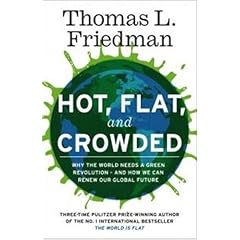
With apologies to the excellent XKCD I think this pretty much sums up my view of Thomas Friedmans new book 'Hot, Flat, and Crowded'

Photobucket

Friedman's book is about 1/3 too long, in large part because he has this ingrating desire to be the first to coin a new term, to tag and bag the changes in world politics and so (with dreams of historical recognition beckoning) creates many new words, subverts words "the green peril" even time periods like "ECE" or Energy Climate Era.

I can understand the desire to be the one who coins the new term, that offers certain power in how the topic is defined (climate change and global warming being two obvious, non-value-netural recent terms). But for all the benefits of the book, in examining how his conclusions from his last book The World Is Flat will be save or doom the effort to fix the climate, its hard to take it seriously when theres so much excess "look at me" effort spattered throughout what is supposed to be a serious book by a serious thinker. His style has always had a journalistic, folksy style, and thats a good thing, it makes the world is flat and the lexus and the olive tree very readable. And whilst he created dozens of terms in both those books, placing them along side hundreads of little anacdotes, this time the forumla feels forced and clumsy. You can let your eyes blur and wander down the page regularly whilst reading and usually never miss a single important point.

Borrow a copy off a friend, its readable, and for those like me who arn't particularly interested in climate change, but recognise its importance it offers some good insights and facts. But instead of being fun, his general style and desire to be 'the one' to tag and identify everything first ends up making the book a bit of a slog.

(Ohh yeah, and why does the UK/Australian cover feature a particularly lush and green earth ? Not all environmental books need to be green.

The God Botherers

From a Prayer invocation at a McCain Rally

"I would also pray, Lord, that your reputation is involved in all that happens between now and November, because there are millions of people around this world praying to their god — whether it's Hindu, Buddha, Allah — that his opponent wins, for a variety of reasons," [Pastor] Conrad said.
"And Lord, I pray that you would guard your own reputation, because they're going to think that their god is bigger than you, if that happens. So I pray that you will step forward and honor your own name with all that happens between now and Election Day,"


I've always been struck by the way the religious use the unknowable nature of god as a defense of questions from his existence to the nature of evil, and then spend so much time portraying and treating god as if he were a man (from the fanaticism around the person of Jesus or the prophets ie the word made explicitly human flesh) to this pastors weird concern that the omnipotent, almight god may be slightly jealous if the Christian Barack Obama wins, simply because people of other faiths may have prayed for it.

Either way welcome to the modern Republican Party.

Saturday, October 11, 2008

A Philosophical Journey

This fascinating blog post has been bouncing around the web, describing one young girls move from generic rational liberalism, through Nietzsche and T.S Eliot to conservatism:


Eventually, though, I realized that my two intellectual priorities led neatly into conservatism: first, I was concerned with creating meaning through community and human connection, as I saw in Eliot and Arendt; second, I felt strongly about human virtue.
We need a set of values that makes us feel guilty about wanting to do the things we should not do; we need a culture that sanctifies those urges and channels them into something beautiful.
Like many conservatives - and by this point I included myself - he was troubled by the decay of the traditional institutions that gave us meaning. The results were just as Arendt had diagnosed: alienation, isolation, susceptibility to totalitarianism. “The historic emphasis on the individual,” Nisbet wrote, “has been at the expense of the associative and symbolic relationships that must in fact uphold the individual’s sense of integrity.”


Clearly here is a serious person intellectually engaged, reading widely and most important someone who is developing their own thought a process of critical importance for true thought and character creation.

But what I don't understand is why these new values identified of community and virtue lead to conservatism? Her references to Burke in this regard make the most sense, but he was a wig from a very different era to anything like conservatism as a modern intellectual movement.

In fact more so, I dont get how one can read Nietzsche or Kierkegaard and come to identify virtue as co-habitable with community? Other than taking a turn like Arendt with a longing wistful look back to ancient communities, scrubbed free of their imperfections through histories passage, such writers most clearly identify that individual virtue can only come through self-creation, almost exactly as demonstrated in this young girls own experience. She has engaged in an act of self-creation towards a virtuous character in spite of her community! Just as her rebellion against her parents views was a necessary first step of this journey, so too must all community institutions, especially those that permit no real change in power relationships (family, church etc) necessarily deny and prevent this act towards individual creation of a virtuous character.
This conclusion however is only challenged if you hold the assumption that non-state communities can create and shape the virtue of their citizens far better than individuals can, and that they ought to have the power to do so, whether or not the individual wants them to have it. For to endorse such structures, many will be merely dragged along, forced by society into pre-set roles and acts. Intellectuals such as the young girl at the heart of our story might be smart enough to recognise this and change it, but for everyone one who can escape a conservative society to self-create independent of the community structures, dozens if not hundreds will simply be left prostrate before it.

Yet why would the author be willing to grant such sweeping powers to society to have control over individuals, in ways that few individuals can ever respond, yet take such a negative view of that other traditional creation of society: Government

State intervention is dangerous not because it’s “coercion” (I don’t mind coercion), but because of its inhumanity. The more we depend on government, the less connection we have with one another. My burning hatred for both major Presidential candidates is due entirely to their New Deal liberalism, their conviction that if something is wrong it must be the government’s job to fix it, their utter disregard for limited government.


Yet government, especially now as we move into the democratic era (one strongly resisted by conservatives old and new alike) is the only institution of power in our society which gives individuals a real chance to participate, change and challenge the relationship between this institution and society. Government is an easy target due to its size and slothfulness, but unlike the churches or million little family units, this one permits even encourages participation and dissent. Not as well as it can have, but the option is there.

And if the option is there, so is the responsibility. The state is no more inhuman than the church or your family unit. Its of people, by people, and if its not for people (and no church ever has been) then the fault and responsibility is our own.

Virtue ? That is your responsibility, whilst it may be nice to think of the spartans whipping virtue into the young, wishing you too could have the rest of modern society from its crack addicts to perverts to slothful today tonight watchers pushed towards a life of virtue, to do that is to deny their humanity, deny their choice and ultimately deny that they have any possibility of a virtuous life. For virtue can not simply be external behaviour rote learned. It has to be valued and sought after by the individual, not simply a pattern of behaviour forced upon an individual if they are to survive and participate in the community.

We may not be a virtuous society today, and many individuals may not express such a character. But for the first time in human history it is at least possible and an option. One built on a real foundation of respect towards us as humans who can choose individual achievement towards nobility, not a forced behaviour as if mere pet dogs trained to beg and bark on command.

You can seek community, or you can seek virtue. Not both, and likely neither with modern conservatism.

Friday, October 10, 2008

The US election calls to a close

The superstitious amongst the Obama hopers wont like this, and no sensible political analyst would declare an election over, but folks this one has pretty much run its course. Obama should win, and should win comfortably. But when the media get to picking why, i think two issues might get overshadowed (esp if the economy keeps tanking): Making Obama a safe choice, and Obama's superior ground game.

Number One - The election was always going to be a referendum on Obama. He is the most talented and interesting new politician in a generation if not the last 50 years. He has a lot to attract people to him, but there was always that sense of otherness and difference that made Americans wary. (And led some to start calling him a terrorist if not just a n**ger –not sure if your work will censor/care about your emails-) . He has done more than enough (although its taken a long time to show) people that he is calm, confident and not a risky choice. Rudd had to do the same thing in OZ, Obama had to do it whilst being the first black man, with a funny name, a foreign background and only a few years in the public spotlight. But especially with the Presidential debates which are natural equalisers putting both candidates on the same stage, letting people look from one to the other, he has held his ground and proven his character. He’s pandered a bit, might not be as progressive as some of us would like, but he is a genuinely inspiring candidate and offers a fantastic potential for America to change its path and direction. The simple fact of a black man winning the US presidency will do absolute wonders to the USA’s standing in the world. Only 9% of Americans think the US is going in the right direction as a country (the lowest in polling history). Obama is far and away the best candidate to bring change. (Which has been his slogan from the very beginning well over a year ago. He’s so good and right even McCain has tried to recently pick up the tag of ‘change’ in his adds – Though dropped it and swapped slogans constantly, indicating the lack of a clear argument for why McCain wants to be president other than the fact he thinks he is entitled.


Number Two
Obama’s ground game – This hasn’t got much attention, and probably wont in the pundits final analysis of why Obama won. (Esp from the craptacular Australian pundits who’s work is always 48 hours behind the US cycle and usually of a very very poor quality. You should ask your Margaret why that is. I’m genuinely puzzled given the interest in Australia why they cant do better than any kid with an internet connection and a handful of blog/news sites bookmarked) Anyway, Obama began work as a community organiser. He like Rudd doesn’t care so much about being seen to ‘win’ the daily news cycle, but he does care about organising offices, volunteers and voter registration drives (along with turnout on the day). He’s been doing this not only in close states but many that were safe republican (look for Virginia or Indiana, either could fall to him in the election). His campaign has been able to talk to a remarkable 40%+ of the early voters. He has thousands more offices around the country than mccain, all calling people, door knocking, working out how to drive old mrs simmons down to the polling booth on the day. (us has voluntary voting). He has simply outorganised McCain. (Bush had a good organisation in 2004, prepared years in advance, which is a large reason he beat Kerry, McCain doesn’t have much support in the republican party normally (which is why he had to choose the farce of Sarah Palin to keep the evangelicals happy), and he didn’t get around to organising his state by state operations till late (nor does he have as much money as Obama). As such, McCain can get on national TV each day and dominate the story, and Obama will still kick his ass comfortably by having his campaign talk to as many voters as possible. Like the ‘otherness’ factor, this is a very slow burn process, that has taken time to see an impact, but the economy tanking has helped crystallise both factors for Obama. So much so that you get amazing quotes like this one turning up : “An Obama supporter, who canvassed for the candidate in the working-class, white Philadelphia neighborhood of Fishtown recently, sends over an account that, in various forms, I've heard a lot in recent weeks. "What's crazy is this," he writes. "I was blown away by the outright racism, but these folks are f***ing undecided. They would call him a n----r and mention how they don't know what to do because of the economy."

A month ago McCain was 4 points ahead nationally, and everyone was saying Palin was going to win the election for him. Today she’s mocked and disliked by most people in America, and Obama is between 6-10 points ahead nationally and in key states. (Indeed if it were held today he could lose every state polling closely and still comfortably win the election). So a month is a fucking long time in politics. But there are too many fundamentals in place that have just about locked most voters into place, and the factors like Obama being seen as a safe pick, and his ground game will only get better and better with each passing day.

Tuesday, October 7, 2008

Recyling the news

I think all bloggers secretely want to be weekly columnists (or openly - Hire me Fairfax, News Ltd!), from the outside it seems a great life, one column a week, only 700 words, everyone reads and complains about what you say, and if your Gerard Henderson it seems, just recyle last weeks news from the US.

This time its not even worth the outrage. Here's his latest weeks work in short:

"the roots of today's mortgage-based financial crisis can be traced back to the Community Reinvestment Act (CRA) which Jimmy Carter signed in 1977".

Put simply, three decades ago the Democrat administration responded to the demands of anti-poverty activists that banks should not discriminate against low-income earning minorities.


This was the story last week in the US, and whilst it served as a temporary talking point for the flailing McCain campaign, it has been thoroughly debunked time and time again.

For gods sake, the thing was passed in 1977. Is he seriously claiming that was the cause of troubles occuring in 2008? Conservatives revere the past, they shouldn't try to live in it.

Hire me SMH, or any of the hundread best Aussie political bloggers. They'll be sure to give you better, and more honest pieces. Its the least your readers deserve.

Sunday, October 5, 2008

This American Life

Like many on the centre-left I've always been interested in America and its story. In some ways it represents the ideal. A constitutional democracy founded on key liberal principles like free speech, with a spirit of independence and resilience. But whenever abstract theory is drawn down into the man made flesh of the state, it inevitably gets grubbier, loses some of that shrine, shadows some of its principles or even takes routes through the dark side in its efforts to maintain its balance.

George W. Bush for this reason has always interested and intrigued me as a uniquely American figure. He seems to represent it all, old school elite family, ivy league education, (limited) military service, a love of texas and ranchers, careers in oil and baseball, alcoholism and born again teetotalism.

Most critically of all however, I believe he is a good man who is attempting to achieve these principles through the flesh of the state, and failing badly.

I've tried to read everything I can on the man(And i'm certainly hanging out for Oliver Stones movie W), my honours thesis in part was based around attempting to understand how he envisaged the idea of freedom a word you find in just about every speech he's given as president since 9/11. I've read all the biographies, supportive and critical, and all the major books on his administration, from supportive former staffers to outraged journalists. His story is America writ large. Good values, betrayed through its hubris and the reality of this messy thing called life.

All that serves as a somewhat long-winded observation that I really dont care about Sarah Palin. If you are interested Jonathan Raban has the single best detailed story of her rise and character. But I cant identify her as a story I want to understand. Bush is a puzzle, one critical to figure out due to his proximity to the critical forces in the world today. Palins story however seems an a ugly shallow picture of a mindless nobody who merely does what she does because its all that she knows. Bush believes in America because it stands for freedom and opportunity for the globe, Palin believes in America because she is an American. Its all she knows, and had she grown up German, she'd be a proud German as imbued in its traditions as the peasants Heidegger idolised (Does that count as a goodwin award?). Such ugliness is unbecoming of the nation she so desperately pretends to represent. She does not. Her's is not an American story. Maybe thats why she's not interesting, she could be anyone from anywhere and the core facts of her life, her complete embrace of local views and desire to grubbily get onto of those around her could occur in any small town in any city in the world.

Bush's is the story of someone who legitimately made something of themselves. He had a lot of help, but his path was never certain or due to the choices of others or even necessarily his environment. His fall from grace with alcoholism, and recognition he might be doomed to live in his -war her, CIA director, US President- fathers shadow drove him to change and challenge his circumstances. That shows real character, to make something of oneself.

Palin to me, however much we should respect her obvious talents and skills, however seems to be entirely a product of her surroundings. She is what her environment made her, with no sign that there was any conscious choice in her path. A product of the ideological programming of her time and place. Some call this authenticity, her handlers certainly would, but that's part of the problem. She is only on the ticket as a result of the scheming ideas of rich old white men, being no more worthy to them than the cocktail waitress who just brought over the latest round of drinks. She's a political pet to men and nature, unconsciously spitting out her lines about being a proud American and how evil her opponent is because that's what she's to do. When you see her speak you realise she could do no other.

Bush always represented to me a uniquely American Story. A puzzle to try and figure out. A tragic tale unfolding before our eyes. Palin's story is simple farce. Hers is not an American Story. America's real story is one of self-creation. Of making and remaking onself, that is why the opportunity, freedom, and independence matter. Because they allow for people to make and remake something of themselves in spite the circumstances. Bush did, Palin never has and probably never will. Hers is not an American story

Saturday, October 4, 2008

Im outraged

Todays Daily Outrage
The Prime Minister, federal Opposition Leader, parents, school groups say they are outraged at news a primary school principal let controversial artist Bill Henson scour the playground for child models.

Prime Minister Kevin Rudd said he would be disgusted if a principal had let controversial photographer Bill Henson into a primary school to search for suitable subjects for his controversial artwork.

"If the report is accurate, I am disgusted by it," Mr Rudd told reporters in Sydney today.

"I think parents would be revolted and horrified if this were true."


I too am outraged that a photographer sought to find models to photograph. Likewise I am outraged that Mechanics like to look at cars (thats weird right?) and the proctologist really does want to look at your butt.

There is of course a process issue there, but every single person who drives a car by the side of a school sees exactly the same, and had Henson gone to the school without first getting the principals permission, people would have been outraged and wondered if he was a a pedophile. But do it formally and for art, and somehow again everyone is outraged. If the police dont think he has a case to argue, and even the family of the child are still 'strong supporters' of Henson's, can we all stop pretending we have a role in this issue.

No one has been harmed in this case, the government and our politicians has no role to play here.

Friday, October 3, 2008

A tale of two positions

CBS Interview with Palin and Biden: "What do you think is the best and worst thing that Dick Cheney has done as vice president?"

The Serious Answer:

BIDEN: I think he's done more harm than any other single elected official in memory in terms of shredding the constitution. You know — condoning torture. Pushing torture as a policy. This idea of a unitary executive. Meaning the Congress and the people have no power in a time of war. And the president controls everything. I don't have any animus toward Dick Cheney, but I really do think his attitude about the Constitution and the prosecution of this war has been absolutely wrong.


The unserious answer:


PALIN: Worst thing, I guess that would have been the duck hunting accident — where, you know, that was an accident. And I think that was made into a caricature of him. And that was kind of unfortunate.


Agree or disagree with Cheney on the US right to torture, choosing something entirely unrelated to his 8 years as VP in such a time is pretty telling that you havn't thought about it a lot. Its not even as if she has to defend Cheney, her running mate McCain has attacked him, and made ending torture a key point in the first presidential debate.(And note her "worst thing Dick Cheney has done" is more a complaint about the media having a laugh at his expense". Talk about being in the bubble.

And with that I'm off to watch the VP debate. Shame its on so early here in Australia, watchers may need a stiff drink if Palin really lets loose. But my prediction: She will annoy liberals and conservatives who have already pulled away, due to nonsense shallow talking points, but wont make any major gaffes and be declared to have beaten expectations simply by not making a giant fool of herself. Media will wonder if this is her second coming, and then forget her tomorrow by the time the House votes on the Financial Crisis bill.

Thursday, October 2, 2008

Outsourcing Democracy

I'm sure this has happened many times before on both sides of the isle (union groups spring to mind) but disturbing none the less

Huff Post


In an email obtained by the Huffington Post, Vets for Freedom field staffer Laura Meyer offered a fraternity at St. Louis University a "sizable donation" - plus free lunch - if it could use their pledges to demonstrate outside the VP debate.

"I was emailing you today," wrote Meyer, "because I am trying to find people who would be willing to hold up signs for a few hours in the afternoon this Thursday outside the VP debate site. It's only for a few hours and you can gain a lot from it.... first off, lunch for any guys who agree to volunteer will be on me. Secondly, they will get lots of media attention! My organization did a similar thing in Mississippi last week and a ton of them were on TV".


Who said capitalism is dying in America ?

Tuesday, September 30, 2008

Contra Henderson

I typically ignore the Australian Media's coverage of the US election. It's usually 48 hours behind the story (why??) and of poor quality. Gerard Hendersons latest column is no exception.

Just imagine what the sneering left intelligentsia, in the United States and elsewhere, would have said if a Republican vice-presidential candidate had told CBS News that "when the stockmarket crashed [in 1929], Franklin Roosevelt got on television" and informed Americans what had happened.

No doubt scores of left-liberal types would have lined-up to say the Republican Herbert Hoover, and not the Democrat Roosevelt, was in the White House when the Great Depression began, and regular TV broadcasting did not occur in the US until about 1941.


You mean left-liberal like the Daily Show? or the new york times?

Either way, everyone sees it for the slip of the tounge it is, and not indicative of a lack of knowledge, when coming from the chairman of the Senate foreign relations committee, judiciary committe, and well respected Senator after 26 years in the legislature. But Hendersons probably warming up to show this in context right ?

Yet the Democrat Joe Biden made these howlers in an interview with Katie Couric. She did not correct the vice-presidential candidate. This is the same Couric who grilled Sarah Palin in an interview which aired a few days later. The line of this interrogation turned on the thesis that the Governor of Alaska is not well enough informed to hold the second-highest office in the US.


Without any need to quote, Biden's gaffe is being compared here to an entire interview. Try and just sort out this effort by Palin in the Couric interview for comparison. Similar economic focus.

COURIC: Why isn’t it better, Governor Palin, to spend $700 billion helping middle-class families struggling with health care, housing, gas and groceries? Allow them to spend more and put more money into the economy? Instead of helping these big financial institutions that played a role in creating this mess?

PALIN: That’s why I say, I like ever American I’m speaking with were ill about this position that we have been put in where it is the tax payers looking to bailout.

But ultimately, what the bailout does is help those who are concerned about the health care reform that is needed to help shore up the economy– Helping the — Oh, it’s got to be about job creation too. Shoring up our economy and putting it back on the right track. So health care reform and reducing taxes and reining in spending has got to accompany tax reductions and tax relief for Americas. A

And trade we’ve got to see trade as opportunity, not as a competitive scary thing. But 1 in 5 jobs being created in the trade sector today. We’ve got to look at that as more opportunity. All those things under the umbrella of job creation.

This bailout is a part of that.


Get that ? The bailout is 'help those who are concerned about healthcare reform', and 'reducing taxes' and 'reigning in spending' and 'trade as an opportunity' and the 'umbrella of job creation'.
Now we've all been there, I see students doing it 5 times a day. The mouth starts talking, the brain hurries behind, throwing out points in a desperate attempt to find either a loop to emphasize their first impulse/point or a circuit breaker to let the pain end, otherwise they simply will trail off in confusion. Hell i do it myself at times. But I'm not running for Vice-President of the USA!

But according to Henderson (or at least he hopes his readers are dumb enough/cant use google to compare) these two things are pretty much equal. With it being damning that the 'liberal intelligencia' is making a fuss about one and not the other.

So on the basis of one candidate having a slip of the tongue, and one being utterly confused, Henderson figures that :


Biden and Palin go head-to-head in their only debate on Friday (Sydney time). Both are able performers so, in scoring parlance, a draw is the likely outcome


Henderson then wanders into attacking some unknown nobodies, depicting satirists as serious commentators:
The feminist Maureen Dowd has depicted Palin as "the glamorous Pioneer Woman, packing a gun, a baby and a Bible"
and trading on gossip:
the NBC News commentator Andrea Mitchell has been reported as maintaining that "only the uneducated would vote for Mrs Palin"

(Got to love that use of the word "reported" for a unsourced claim about a reporter. She didn’t report it, it was simply said by others that she said so, but easy to miss over the morning coffee/or for those who want to miss such nuance)

But lets go on:

Palin has responded as well as possible to this criticism. She pointed to her experience as mayor of Wasilla (population 7000) and, more recently, Governor of Alaska. For an Australian comparison, the position of Alaskan governor would equate with the Tasmania premiership. Tasmania is Australia's smallest state but those who become its premier are invariably politically skilled. The former prime minister Joe Lyons, who was once premier of Tasmania, comes to mind.


Honestly I have no idea what this paragraph is doing in the story. Either Henderson thinks his readers have so little idea about Alaska that they need to be informed its comparable to Tasmania, OR he is comparing Palin to Joe Lyons, who spent 19 years in the tasmanian legislature, 5 of them as both Premier and Treasurer. And he spent 3 in the federal ministery BEFORE he became Prime Minister.
Palin for the record spent 6 years as a tiny city mayor, and is in her second year as governor.

How is that possibly comparable ?

Sadly that’s only page one of his inanity. Lets move as quickly through this as we can eh?

Moreover, Palin responded to the Couric putdown that she has travelled very little outside of the US with a matter-of-fact depiction of her life so far: "I'm not one of those who maybe come from a background, you know, kids who perhaps graduate [from] college and their parents give them a passport and give them a backpack and say go travel the world. No, I've worked all my life. In fact, I usually had two jobs until I had kids."


First, since when was it a putdown to be asked if a person attempting to become one of the most powerful people in the world had ever you know... visted the world ?

And Palin's response is nothing to be proud of, being simple class warfare, and not in anyway an excuse. I met dozens of American kids when in europe who had neither rich parents, nor didn't have to work all their life. They worked and saved so they could visit the rest of the world. It's a sacrafice that only the genuinly curious make, but that has always been very very open to Americans.

Second as Eunomia blogger Daniel Larison points out, there was more to her answer:
Palin: "I was not a part of, I guess, that culture. The way that I have understood the world is through education, through books, through mediums that have provided me a lot of perspective on the world."

Larison: "if she has spent so much time with book-learning about the rest of the world why is it that she doesn’t seem to know anything? It should not necessarily be a problem that she has not traveled abroad, provided that she does know something about international affairs, but she manages to combine a lack of personal experience with a lack of knowledge about other countries."


Palin might not have been able to afford it, but her very real lack of any knowledge about the foreign world, or indeed even American Foreign Policy (what is that Bush Doctrine again ?) indicates she wasn't even curious about it either. And no one, no matter how rich travels overseas if they arn't curious about the world (hello G.W. Bush)

From here though it just gets weird. Henderson smugly highlights Bill Clinton emphasising these things about Palin and her key attributes
Bill Clinton .. said he could only judge Palin from how he believes she is going in his home state of Arkansas "where half the people live in communities of less than 2500 and there are people who are pro-choice and pro-life and more than half the people have a hunting or fishing licence". He added that "they like families that hang together, that deal with adversity, that are proud of all their members".


So its a good thing that she's pro-choice, pro-life, has a family and hunts ?

Wrong- Or at least when it comes from the mouth of a journalist

The anti-Palin ethos prevalent among left-liberals in America can also be found in Australia, at differing levels of intensity. For example, on September 17, the 7.30 Report presenter Kerry O'Brien introduced a report on Palin with a reference to "the pro-gun, pro-life mother of five". For the record, O'Brien does not mention his own family arrangements on either the 7.30 Report website or in his Who's Who In Australia entry. In the subsequent report, Tracy Bowden referred to the Governor of Alaska as "the moose-hunting, evangelical mother of five". Yes, we know.


Mercifully this thing is almost coming to an end (after some attack on the left and suburban Australia. I've no idea the relevance, considering Alaska is as far from suburbia as you can get.)

By the way, I will be watching[the VP debate] and rooting for Palin.


I'm sure we're all shocked.

The sad thing is that Henderson is actually the exact opposite of Palin in terms of their approach to politics

Henderson attended the Jesuit Xavier College in Melbourne. He studied Arts and Law at the University of Melbourne, prior to completing his Ph.D. He taught at Tasmania and La Trobe universities before working for four years on the staff of Kevin Newman in Malcolm Fraser’s Coalition government.

From 1980 to 1983 he was employed in the Commonwealth Department of Industrial Relations and was Chief-of-Staff to John Howard between 1984 and 1986 (during which time Howard was Deputy Leader, and later, Leader of the Liberal Party of Australia). Gerard Henderson was appointed by the Keating government to the board of the Australia Foundation for Culture and the Humanities and by the Howard government to the editorial board of the Documents on Australian Foreign Policy series.

As a commentator Henderson is on the conservative side of politics on issues such as industrial relations, national security and the Iraq War, while holding progressive political views on the Australian republic, asylum seekers, multiculturalism and euthanasia. His columns defended the former Howard government policy on Iraq and national security since the September 11 attacks.

Gerard Henderson is the author of Mr Santamaria and the Bishops (1982), Australian Answers (1990), Gerard Henderson Scribbles On (1993), Menzies' Child: The Liberal Party of Australia (1994, second edition 1998) and A Howard Government? Inside the Coalition (Harper Collins, 1995) - as well as numerous articles and essays


He has a PhD, experience in government, and numerous essays and books to his credit.
He is smart, articulate, and when not writing such culture wars pap, a coherent considered voice for his political ideology.
(Though Palin was a sports newscaster. I guess that makes it about even eh Gerard ?)

Every ideology or political grouping has to accommodate those who's views come from their intellectual engagement with the world, and those whose similar views come from natural, instinctive, gut calls. Keeping these two groups together is hard.

But few sights have been as pathetic as seeing the conservative intelligencia prostrate itself before the 'feel don’t think' wing of their party, denying both the intelligence, education and experience they had for so long regarded as critical before one could earn a public voice and be taken seriously.

The Bailout

In reading the right wing blogs post failure of congress on the bailout bill, this now seems an emerging sentiment:
I see free markets as very much the underdog going forward. But if there is no bailout, then at least markets have a fighting chance. I would want to defeat this particular revolt of the elites, realizing that larger battles probably lie ahead.


You have to admire that some are at least sticking with their principles in the free market, even in a clear case of massive market failure, but one historical quote comes clearly to mind:

'the best friend the profit system ever had'
- Franklin Delano Roosevelt, 1930's, speaking about himself.


Roosevelt was from a wealthy patrician family who detested communism and much of socialism with it. But he recognised that, however strong the principles of the free market were, the priority of the government was to maintain a strong, robust American economy and society. Only then could capitalism have a hope of operating anything like the textbooks and theorists suggested it could. Only where there is strong order, and popular support for the continuance of the republic can capitalism properly operate. (See Russia post Cold War, or Iraq esp in 2003-2004 for counter examples of real free market, no regulation capitalism. Only thieves and crooks prosper.)

Many who have drunk the Kool-aid on pure free markets are admirably standing by their principles of the free market, fearing some "larger battle" ahead such as great socialization of industry. But if the risk is even half as big as Paulson and others are suggesting from failing to act, the bailout is likely to be seen as a very, very, light change to the economy in comparison.

FDR saved the capitalist system by first restoring confidence to the economy and state. Maybe Obama (who in many ways reminds me of FDR) will have to do the same.

Monday, September 29, 2008

The Fall and Fall of Tony Abbott

Alternatly I was going to title this post: The perils of boxing as a young man. For only its many blows to the head, affecting his internal sense of balance can explain Tony Abbot's strange claims tonight:

TONY ABBOTT has attacked any taxpayer-funded paid maternity scheme that delivers more help to working mothers than stay-at-home mums.
In response to today's Productivity Commission recommendation of a new taxpayer-funded scheme offering 18 weeks' paid leave to working mums, the Opposition families spokesman told The Australian Online he is concerned that women not in the paid workforce will miss out.

"I have real issues with the government giving women in the paid workforce more than they give mothers in the unpaid workforce,” Mr Abbott said.

"I don't think stay-at-home mothers should be classed as second hand citizens."

The draft maternity leave report recommends 18 weeks of paid leave at the minimum wage for working women - about $11,000 for every child. Women not in the workforce would only secure the equivalent to the baby bonus of about $5000.

It would cost $1.3 billion or a net cost of about $400 million after the baby bonus was abolished and the savings rolled into the new scheme.


Right, because getting $5'000 to do exactly what you were doing previously, is the sign of a "second-class citizen".

Abbott is someone i've always peversely liked, much to the annoyance of my more left wing friends. I may disagree with just about everything he says, but he is someone who holds clear, passionate views about improving the country. He rarely uses his faith as an argument for his positions (the RU-486 was a notable slip up). And he is involved in many organisations servicng their causes, from the volunteer firemen through to local charities. He's smart, articulate, and ambitious.

But he has a political tin ear. That he has risen so highly is slightly amazing until you see the mentors behind his rise, first Hewson as an advisor, then later Howard who pushed him all the way into the Cabinet. Indeed you have to wager Howard was seeking to groom Abbott to take over instead of Costello, but a combination of Costello's supporters, Howards own love of the job, and Abbotts faltering political skills (only barely helping electorally despite the billions thrown into the 2004 'medicare plus' policy, the Ru-486 debacle, and numerous other slip ups. By the time he was insulting Roxon on mike for the 2007 election, everyone knew his fall from grace was complete.) Time after time, he has either failed to take advantage of issues, or made himself out to be the bad guy in a situtation, even if many in the community would agree with his position.

In 2003, Michael Duffy wrote one of the best books on Mark Latham. In perhaps his wisest move he made it a duel book about Latham, and Abbott.
Photobucket

Unless Tony's out rallying forces now against Turbull, it's likely Abbott will never be PM. And thats probably in the countries best interest, but for someone with so much obvious talent and genuine public service, it's intriguing to see so much of the damage to their career being entirely self-inflicted. Tonight's effort, which even The Australian(!) is slamming him for, is just one more highlight on his fall.